How to Choose Office Meeting Tables for Your Business
Choosing office meeting tables for your business is more than matching a finish to your brand. The right table should support clear discussion, comfortable posture, reliable technology, and efficient use of floor space. In a busy workplace, small details quickly become practical problems. A shallow table may crowd laptops and coffee cups. A glossy surface can reflect ceiling lights into video cameras. A heavy pedestal may block knees and frustrate users. These issues affect meetings more than many buying teams expect.
This guide examines size, shape, materials, cable management, accessibility, and long-term maintenance. It also considers how different teams actually meet. Short meetings need speed. Workshops need flexibility. Client presentations need polish. Details matter. Recommendations should come from practical experience, workplace planning knowledge, and dependable product information. Facilities managers, designers, and daily users can reveal weaknesses that showroom visits often hide. Their feedback may expose unstable legs, difficult cleaning, or insufficient power access.
A careful decision starts with the room itself. Measure walls, doorways, walking paths, and the space behind each chair. Then compare those measurements with the table’s real dimensions, not just its advertised seating capacity. Consider screens, microphones, power outlets, and future team growth. A beautiful table can still fail when cables cross walkways. There is no universal solution. An oval table may improve sightlines, while a rectangular model may use a narrow room better. Even experienced buyers can misjudge changing work patterns. Review your assumptions, test the layout when possible, and choose a table that remains useful after the first impression fades.
Define Your Meeting Needs and Available Office Space
How to Choose Office Meeting Tables for Your Business
Define the meeting before choosing the table. Is it for weekly team updates, private negotiations, training, or video calls? Gallup’s 2024 workplace research reports that 53% of remote-capable employees use a hybrid schedule. Your meeting room therefore needs flexible support for both in-person and remote participants. Count expected users, meeting duration, equipment, and required privacy. A six-person project meeting needs a different layout from a twelve-person client session.
Measure the room carefully. Record wall lengths, door swings, columns, windows, outlets, and camera positions. Leave enough space for chairs to move without blocking walkways. A six-person rectangular table often needs roughly 1800 to 2400 millimeters of length, depending on chair width and equipment. Test the layout with paper outlines first. It feels basic, but it prevents expensive mistakes.
The 2024 Leesman Index benchmark draws on more than 1.7 million workplace responses and emphasizes that effective spaces depend on practical functionality. Use that evidence when reviewing lighting, acoustics, power access, and table flexibility. A modular table can support changing attendance, while a fixed boardroom table may waste valuable space. My first layout would probably overestimate daily attendance. That is worth challenging. Hybrid schedules often reduce physical attendance, but important meetings may still require generous table space. Include foldable sections, movable chairs, and accessible routes without making the room feel crowded.
Choose the Right Table Shape for Collaboration
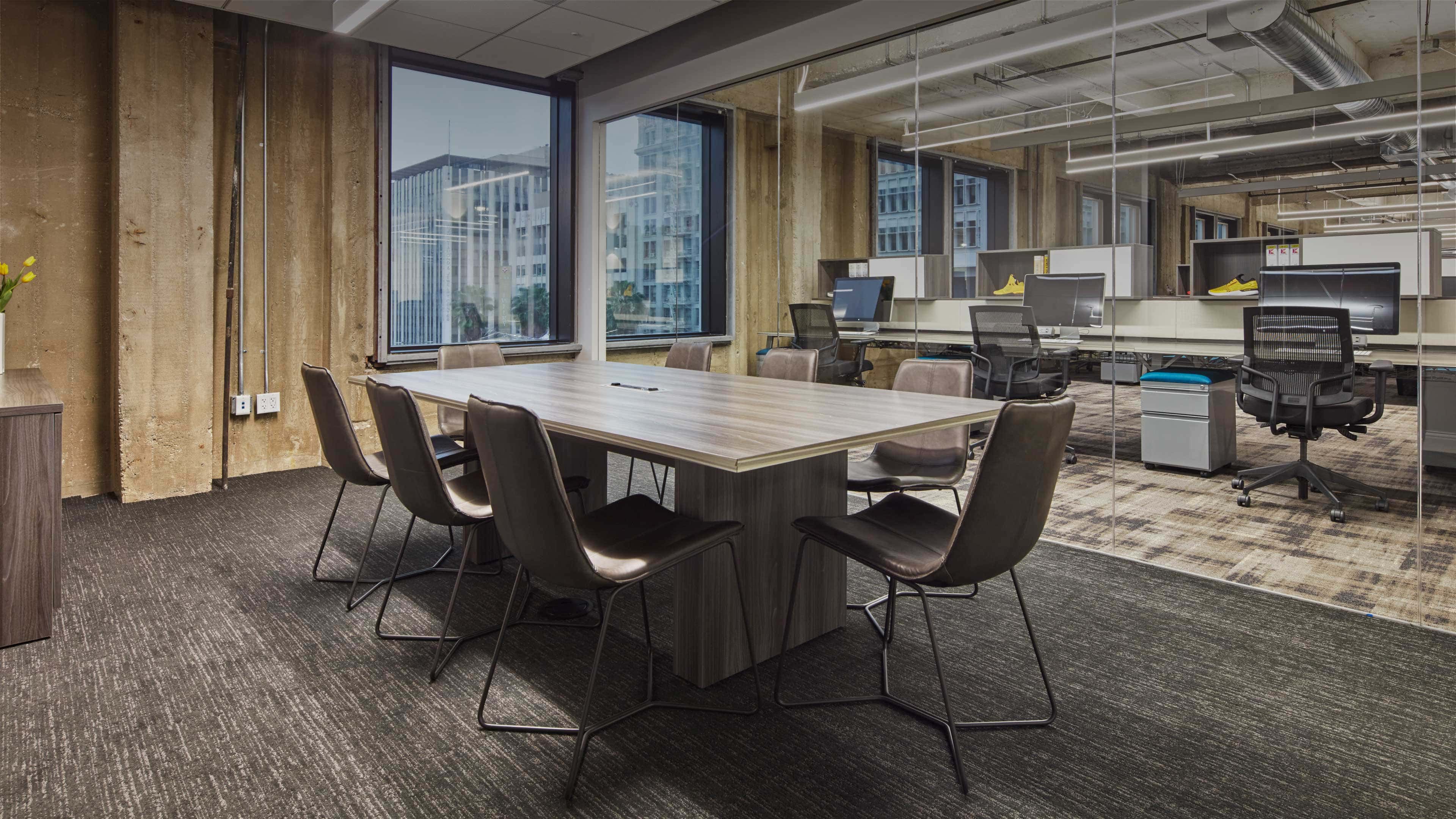
When choosing office meeting tables, shape should support the work, not merely fill the room. A rectangular table suits presentations, interviews, and document reviews. Its long edges create clear seating lines, but distant participants may feel disconnected. A round table feels more equal. Everyone can see faces easily, making it useful for coaching, quick decisions, and smaller discussions.
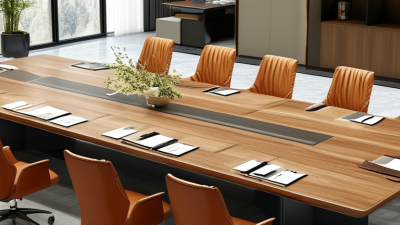
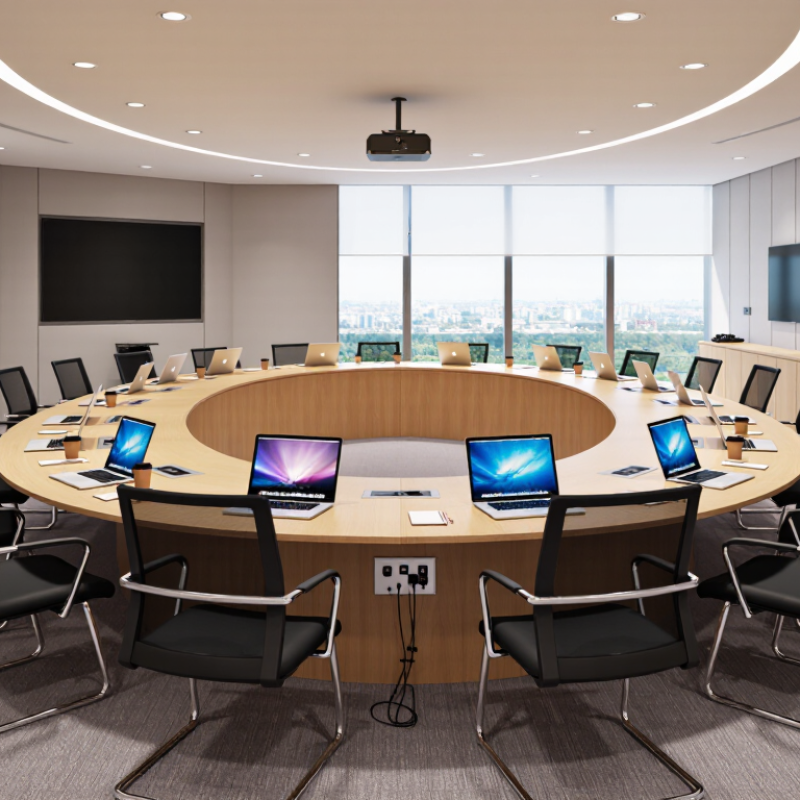
A boat-shaped or oval table creates better sightlines than a sharp rectangle. It gives people more elbow room near the center and reduces the “head of the table” effect. The 2023 Work Trend Index reported that 73% of employees wanted flexible work options, while 67% wanted more in-person interaction. That tension matters. A six-person oval table can support conversation, video calls, and occasional solo work without feeling crowded. Too small, and laptops collide.
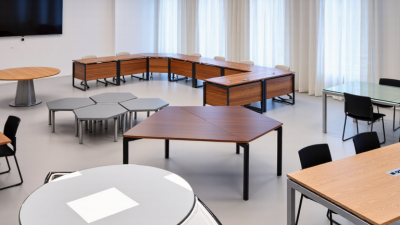
For larger teams, modular tables offer practical flexibility. They can form a classroom layout, a conference setting, or several project stations. Recent workplace research also shows that employees value choice among different work settings, rather than one fixed arrangement. I have seen teams select large rectangular tables because they look impressive, then avoid them during informal conversations. That choice was not entirely wrong, but it needed more reflection. Measure walking space, screen visibility, and chair movement before deciding. A shape that looks efficient on paper may slow collaboration in real use.
How to Choose Office Meeting Tables for Your Business - Choose the Right Table Shape for Collaboration
| Table Shape |
Typical Dimensions |
Recommended Capacity |
Collaboration Strength |
Best Use Cases |
Space Considerations |
| Rectangular |
6–12 ft long × 3–4 ft wide
(1.8–3.7 m × 0.9–1.2 m) |
6–14 people |
High for structured discussions and presentations |
Boardrooms, project reviews, formal meetings, hybrid conferences |
Efficient in rectangular rooms; allow clear circulation around all sides |
| Boat-Shaped |
6–12 ft long × 3–5 ft wide
(1.8–3.7 m × 0.9–1.5 m) |
6–14 people |
Very high because participants have improved sightlines |
Executive meetings, strategy sessions, video-enabled collaboration |
Requires slightly more width than a standard rectangular table |
| Round |
3–6 ft diameter
(0.9–1.8 m diameter) |
3–8 people |
Excellent for equal participation and informal exchange |
Small team meetings, coaching, interviews, quick discussions |
Uses space efficiently in compact rooms, but diameter limits seating flexibility |
| Square |
3–5 ft per side
(0.9–1.5 m per side) |
4–8 people |
High for focused, face-to-face teamwork |
Small project teams, collaborative workrooms, training areas |
Easy to arrange in modular layouts; corners may reduce circulation space |
| Racetrack |
6–12 ft long × 3–5 ft wide
(1.8–3.7 m × 0.9–1.5 m) |
6–14 people |
Very high with comfortable seating and clear sightlines |
Large conference rooms, presentations, board meetings |
Rounded ends improve movement and reduce sharp corners in busy rooms |
| Boat-Shaped Modular |
Individual modules: 4–6 ft long × 2–3 ft wide
(1.2–1.8 m × 0.6–0.9 m) |
4–8 people per module |
Excellent for flexible group sizes and active teamwork |
Training rooms, agile teams, multipurpose collaboration spaces |
Designed for reconfiguration; confirm nesting, caster, and storage requirements |
Planning note: Allow adequate clearance for chairs, movement, accessibility, and door swings. Actual capacity depends on table leg placement, chair width, equipment, and local accessibility requirements.
Select Suitable Materials, Size, and Seating Capacity
How to Choose Office Meeting Tables for Your Business
Selecting an office meeting table starts with the room, not the catalog. In my experience, teams often measure the tabletop but forget chair movement, door swings, and power outlets. Record the room’s length, width, windows, heating units, and cable locations. Leave about 36 inches behind occupied chairs for comfortable movement. A narrow walkway can make a good table feel impractical.
Material should reflect daily use. Solid wood adds warmth and can often be repaired, but it may show dents and require maintenance. Laminate handles coffee spills and frequent cleaning with less concern. Metal frames provide dependable support, while glass can make a small room appear larger. However, glass shows fingerprints and glare easily. There is no perfect surface.
Measure twice. Test once.
For seating, allow roughly 24 inches of table edge per person. A 60-inch round table usually seats four people comfortably, while a 72-inch round table may support six. A 72-by-36-inch rectangular table commonly suits six, and a 96-by-42-inch table can accommodate eight. These figures change with chair width, laptops, and documents. Place masking tape on the floor before ordering. Add temporary chairs and simulate a real meeting. It may reveal an uncomfortable truth: maximum capacity is not the same as useful capacity. Ask employees whether they need writing space, screens, or wheelchair access. A smaller table can work better when movement and focus matter.
Evaluate Technology, Accessibility, and Workplace Flexibility
A meeting table should support real work, not only look polished in a showroom. Begin by listing your technology needs. Check power outlets, cable routes, screen connections, and charging access. A table with hidden wiring can prevent loose cables from crossing walking paths. Leave enough space for laptops, notebooks, and shared displays. Test it in person. A beautiful surface may still create awkward reach distances.
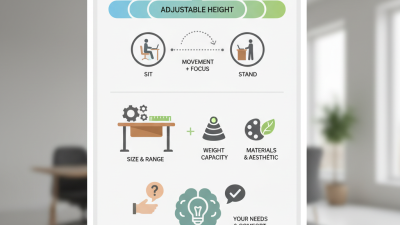
Accessibility requires practical observation. Provide clear knee space and comfortable seating positions for different users. Avoid thick supports that block wheelchairs or limit movement. The table height should work for seated and standing meetings when possible. Check whether people can approach from more than one direction. Access matters. Ask employees with different mobility and sensory needs to review the layout. Their experience may reveal problems that measurements miss.
Workplace flexibility also affects the table’s long-term value. Modular tables can support training sessions, interviews, and small group discussions. Lockable casters make rearrangement easier, while nesting designs save storage space. However, movable furniture may reduce stability or create noise on hard floors. I once underestimated this during a workplace project. The layout looked efficient, but constant movement disrupted nearby conversations. Choose durable surfaces, simple adjustment systems, and finishes that withstand daily cleaning. Review the room’s lighting, acoustics, and traffic before ordering. A flexible table should adapt without making every meeting feel temporary.