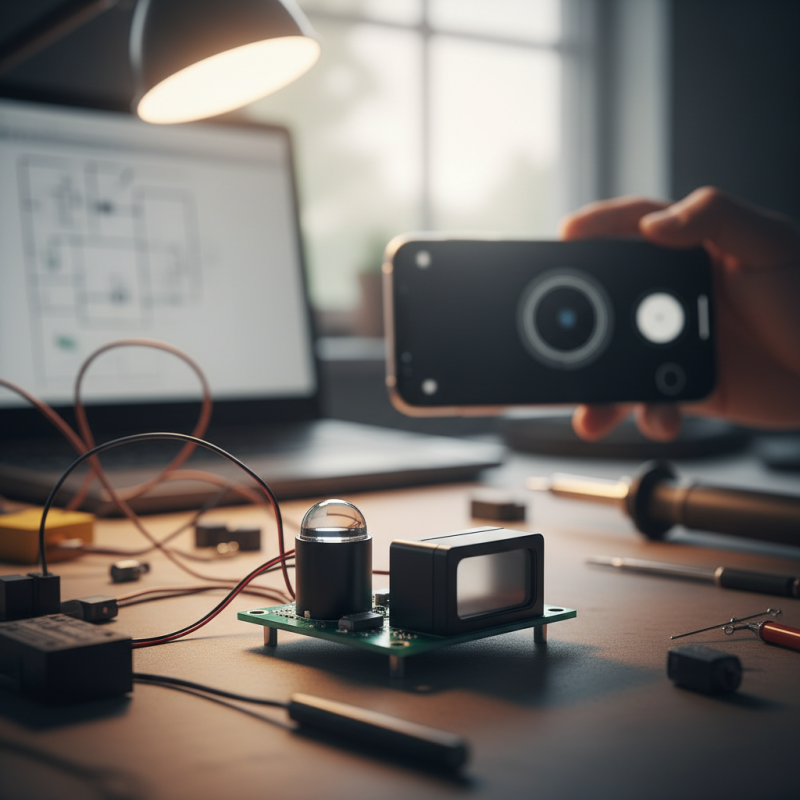
What is an Ir Sensor and How Does It Work?
An Ir Sensor, or infrared sensor, is a crucial component in many electronic devices. It detects infrared radiation emitted by objects. Understanding how these sensors work can help us appreciate their applications in daily life.
The technology behind an IR sensor is fascinating. It can sense heat and motion, making it useful for security systems and automatic lighting. Many smartphones also use IR sensors for various features. However, not all IR sensors are created equal. Some may struggle in bright light, which can limit their effectiveness.
While IR sensors are widely used, their operation is not always perfect. Users may experience delays in response time or sensitivity issues. These drawbacks prompt ongoing research and development to enhance their performance. Embracing these challenges can lead to innovation and improved technology in the future.
What is an Infrared (IR) Sensor?
Infrared (IR) sensors are fascinating devices used in various applications. They detect infrared radiation, which is emitted by objects based on their temperature. Every object radiates heat, and IR sensors can pick up these signals. This technology is widely used in cameras, remote controls, and even security systems.
The operation of an IR sensor is relatively simple. It consists of a lens that focuses the incoming infrared rays onto a detector. This detector converts the thermal energy into an electrical signal. Depending on the temperature change, the sensor can trigger an action. For instance, in motion detection, it alerts a system when it senses a warm body passing through.
While IR sensors are effective, they have limitations. They can be influenced by environmental factors like dust or fog. These conditions can obstruct the sensor's view, leading to false readings. Therefore, users must maintain the accuracy of IR devices regularly. Understanding these nuances helps in maximizing their potential. By recognizing both their strengths and weaknesses, one can harness the benefits of IR technology more effectively.
What is an Ir Sensor and How Does It Work? - What is an Infrared (IR) Sensor?
| Dimension | Details |
| Type of IR Sensor | Active and Passive |
| Operating Principle | Detection of infrared radiation |
| Common Applications | Motion detection, temperature measurement, remote controls |
| Detection Range | Typically 5-10 meters for passive sensors |
| Advantages | Low power consumption, non-contact detection |
| Disadvantages | Sensitivity to environmental conditions, limited range |
Key Applications of IR Sensors in Modern Technology
Infrared (IR) sensors play a critical role in various modern technologies. One key application is in home automation. IR sensors allow devices to detect human presence. This capability enhances energy efficiency by activating lights or adjusting thermostats only when needed. Such technology improves comfort and reduces energy waste.
In the healthcare sector, IR sensors are vital for non-invasive temperature measurement. Healthcare professionals rely on these tools for quick assessments of patients. IR thermometers can provide accurate readings without contact, which is crucial in reducing infection risks. However, these measurements can sometimes be affected by environmental factors, leading to inaccuracies.
Another interesting application is in security systems. IR sensors can identify intruders by detecting body heat. They are used in motion detectors for alarms and surveillance cameras. Such features are essential for enhancing security. Yet, they may sometimes trigger false alarms due to small animals or environmental changes. There is room for improvement in the algorithm that filters out these unnecessary alerts. Understanding these limitations can lead to better, more reliable technology.
How Do IR Sensors Detect Infrared Radiation?
Infrared (IR) sensors play a crucial role in detecting infrared radiation. They work by sensing the heat emitted by objects. This heat is usually invisible to the human eye. The sensor's ability to detect even small amounts of heat makes it valuable in various applications.
When an object emits infrared radiation, the sensor's components react. Many sensors utilize voltage changes caused by this radiation. Others may use pyroelectric or thermopile principles to convert heat energy into an electrical signal. These signals are then processed to determine the location and temperature of the object. For instance, in security systems, IR sensors can detect intruders based on their body heat.
However, not all IR sensors detect the same range of wavelengths. Some might miss important signals. Moreover, environmental factors like temperature changes can affect performance. Understanding these factors is essential for optimizing the sensor’s effectiveness. Careful calibration and testing are vital for ensuring reliable operation.
Types of IR Sensors: Passive vs. Active
Infrared (IR) sensors come in two main categories: passive and active. Understanding these types can enhance your knowledge of how they function and their applications. Passive IR sensors detect infrared radiation emitted from objects. They are commonly used in motion detectors and security systems. These sensors can identify changes in heat signatures, enabling them to sense the presence of people or animals nearby.
On the other hand, active IR sensors emit infrared light and detect its reflection from objects. They create an active environment for sensing distances and shapes. Active sensors are crucial in applications like remote controls and vehicle collision avoidance systems. They often require careful calibration to ensure accuracy.
While both sensor types have their strengths and weaknesses, it's essential to note their limitations. Passive sensors can be less effective in environments with fluctuating temperatures. Active sensors may struggle with certain surfaces that absorb IR light. Understanding these nuances can help in choosing the right sensor for specific needs.
Understanding the Working Principle of IR Sensors and Their Components
Infrared (IR) sensors play a vital role in various applications. These devices detect infrared radiation, which is emitted by all objects based on their temperature. They convert this radiation into electrical signals, allowing for temperature measurement or motion detection. The core components of an IR sensor include a photodetector, a lens, and an electronic circuit. Understanding the functioning of these components is essential for optimizing sensor performance.
IR sensors are crucial in industries such as automotive and home automation. According to a report by MarketsandMarkets, the global IR sensor market is projected to reach $1.63 billion by 2025. This growth highlights the increasing reliance on this technology for safety and automation solutions. However, not all IR sensors exhibit the same level of sensitivity or accuracy. Environmental factors like humidity can influence performance.
Tips: When using IR sensors, ensure they are clean and unobstructed for accurate readings. It's also important to consider the surrounding temperature, as this can affect the sensor's response time and efficiency. Proper calibration can lead to significantly improved results, enhancing overall system reliability.
IR Sensor Working Principles Data Visualization
This chart illustrates the efficiency of different working principles of IR sensors, highlighting their performance in terms of absorption, emission, reflection, and transmission. The efficiency percentages provide insight into how each principle contributes to the overall functionality of IR sensors.