

How to Choose the Best Inflatable Dome?
Choosing the right Inflatable Dome requires more than comparing attractive shapes and colorful fabric. A dome may look impressive online, yet perform poorly in wind, heat, or repeated installation. The best choice depends on its purpose, location, expected crowd, and operating schedule. An exhibition dome needs different features than a sports shelter or temporary event venue. Start with the real use case. Measure twice.
Material quality deserves close attention. Look for reinforced PVC or coated fabric, strong seams, reliable air pumps, and clear load information. Ask manufacturers for fire-resistance details, weather limits, maintenance guidance, and documented testing. Independent certifications can support trust, but they should not replace practical inspection. Check zippers, anchor points, emergency exits, flooring, and ventilation before purchase. Small weaknesses become expensive problems during a busy event.
Experienced suppliers should explain installation time, energy consumption, repair procedures, and storage requirements without hiding limitations. Request project references and photographs from comparable environments. A responsible supplier will discuss what the dome cannot safely handle. That honesty matters. I would also compare total ownership costs, not only the initial price. A cheaper model may require stronger fans, frequent patching, or extra staffing. Still, no checklist predicts every situation perfectly. Local weather, ground conditions, and user behavior can change the outcome. Review the details with qualified safety professionals, follow manufacturer instructions, and choose a design that remains practical after the excitement fades.
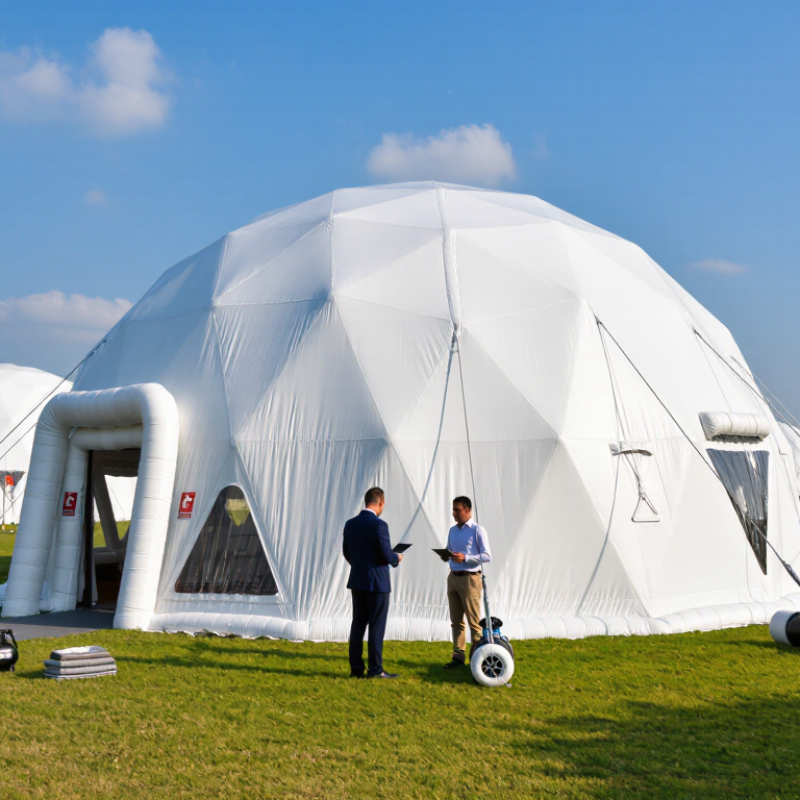
Define the Purpose, Location, and Expected Use of the Inflatable Dome
How to Choose the Best Inflatable Dome?
Define the purpose before comparing materials, sizes, or air systems.
A dome for children’s activities needs soft flooring, clear supervision, and safe entry points. A sports dome requires greater height, stronger ventilation, and enough space for sudden movement. Exhibition use may need bright lighting, quiet airflow, and clean interior walls. Write down the expected number of visitors, daily operating hours, equipment dimensions, and setup frequency. I once underestimated storage space, and the folded structure filled more room than expected.
Location changes the decision.
Measure the ground carefully, including nearby trees, walls, drainage, and vehicle access. Grass may feel comfortable, but wet soil can weaken anchoring. Concrete offers stability, yet it needs suitable protection beneath the base. Check typical wind, rain, heat, and temperature changes for the site. Confirm that power is available for continuous inflation. Review the supplier’s technical data, anchoring method, fire performance, emergency access, and maintenance instructions. Local safety requirements should also be checked by a qualified professional.
Tips:
Visit the proposed site with a tape measure. Mark the entrance, exits, cables, and walking paths. Ask whether the dome can remain inflated overnight. Inspect seams, fans, anchors, and pressure readings before each use. Keep a written inspection log. Do not rely on appearance alone. A larger dome is not always better. It may increase energy use, staffing needs, and evacuation distance. Purpose, location, and expected use must work together.

Compare Dome Types, Shapes, Sizes, and Available Interior Space
Choosing the best inflatable dome starts with its purpose, not its advertised diameter. An air-supported dome works well for temporary exhibitions, sports areas, and open public events. It uses continuous air pressure to maintain its shape. A framed inflatable dome offers stronger zoning and often supports heavier interior equipment. Geodesic designs can improve stability, but their segmented surfaces may reduce usable wall space. Check technical documentation for pressure requirements, material ratings, emergency exits, and weather limits.
Shape directly affects how people use the interior. A hemisphere distributes loads efficiently and provides good central height. However, its curved edges create less standing room near the walls. A tunnel-shaped dome gives longer side areas for seating, displays, or storage. An oval design can balance circulation with a more spacious appearance. Measure the floor, not the air volume. A 10-meter circular dome covers about 78.5 square meters mathematically, but equipment and curved edges reduce practical space.
Size decisions should include people, furniture, ventilation, and movement paths. Leave clear routes around entrances and avoid placing tall structures beneath low sections. I once underestimated the space needed for cables and service access. The dome looked generous, yet the usable area felt crowded during setup. A smaller dome with better clearance may perform better than a larger model with poor planning. Request a scaled floor plan and test furniture placement before ordering. Real conditions are less forgiving.
How to Choose the Best Inflatable Dome? - Compare Dome Types, Shapes, Sizes, and Available Interior Space
| Dome Type | Typical Shape | Common Size Range | Example Footprint | Approx. Floor Area | Typical Clear Height | Available Interior Space | Best-Suited Applications | Important Considerations |
|---|---|---|---|---|---|---|---|---|
| Single-Layer Air-Supported Dome | Round or oval | 6–12 m diameter | 10 m round | Approx. 79 m² | 4–6 m | Open, column-free central area with efficient use of floor space. | Temporary sports courts, exhibitions, storage, seasonal venues, and community events. | Lightweight and economical, but it generally provides less thermal insulation than a double-layer structure. |
| Double-Layer Insulated Dome | Round, oval, or streamlined dome | 10–25 m diameter | 20 m round | Approx. 314 m² | 7–10 m | Large unobstructed interior with improved temperature stability and reduced condensation risk. | All-season events, dining areas, hospitality spaces, classrooms, and recreational facilities. | Higher purchase, installation, and inflation-system requirements than a single-layer dome. |
| Geodesic Inflatable Dome | Faceted polygonal dome | 10–30 m diameter | 15 m round-equivalent | Approx. 177 m² | 6–9 m | High central volume and strong visual presence, with relatively efficient structural geometry. | Planetariums, immersive displays, science exhibitions, projection shows, and branded-free public installations. | Panel layout and anchoring may be more complex than for a simple circular membrane. |
| Clear Inflatable Event Dome | Round or oval transparent dome | 8–18 m diameter | 12 m round | Approx. 113 m² | 5–8 m | Flexible open space with strong daylight access and unobstructed sightlines. | Pop-up galleries, product-free cultural events, photo spaces, lounges, and temporary dining venues. | Transparent materials can increase solar heat gain; ventilation and climate control should be planned carefully. |
| Rectangular Inflatable Air Hall | Rectangular with rounded roof | 8–20 m wide × 12–40 m long | 12 m × 24 m | Approx. 288 m² | 4–8 m | More predictable wall-to-wall usable area and easier placement of rows, booths, equipment, or seating. | Sports training, warehouses, trade fairs, dining halls, and temporary workspaces. | Usually offers less efficient airflow and a less uniform load distribution than a circular dome. |
| Small Promotional or Garden Dome | Round or low-profile oval | 3–6 m diameter | 5 m round | Approx. 20 m² | 2.5–4 m | Compact interior suitable for a small display, reception point, seating area, or interactive installation. | Information booths, sampling areas, small exhibitions, private gatherings, and outdoor retail displays. | Easy to transport and install, but furniture capacity and circulation space are limited. |
| Medium Multi-Purpose Dome | Round or oval | 12–18 m diameter | 15 m round | Approx. 177 m² | 5–8 m | Provides enough open space for seating, presentation zones, exhibition stands, or small sports activities. | Corporate-free public events, workshops, art installations, temporary classrooms, and fitness activities. | Requires a level site, reliable anchoring, continuous or controlled air pressure, and clearly marked exits. |
| Large Exhibition or Sports Dome | Round, oval, or polygonal | 20–35 m diameter | 25 m round | Approx. 491 m² | 9–14 m | High-volume, column-free space for large crowds, equipment, seating layouts, and elevated installations. | Indoor sports, major exhibitions, concert-style events, large public gatherings, and temporary venues. | Needs professional engineering, substantial anchoring, emergency egress planning, and stronger HVAC capacity. |
| Long Oval Dome | Elliptical or elongated oval | 10–18 m wide × 18–35 m long | 12 m × 24 m oval | Approx. 226 m² | 5–8 m | Creates a clear directional layout, making it easier to organize entrances, stages, displays, or seating rows. | Walk-through exhibitions, dining layouts, temporary classrooms, galleries, and event circulation areas. | Uses the site efficiently when the available land is narrow or elongated, but may require careful internal zoning. |
Floor-area figures are approximate planning values. Circular areas are calculated using π × radius²; oval areas are estimated using π × half-width × half-length. Actual usable space depends on wall curvature, airlocks, equipment, insulation layers, entrances, safety clearances, and local structural requirements.
Evaluate Materials, Safety Features, Weather Resistance, and Durability
Choosing the best inflatable dome starts with its fabric, seams, and internal pressure system. Commercial PVC-coated polyester offers useful abrasion resistance and easier cleaning. TPU-coated fabrics can feel lighter and more flexible, but their price may be higher. Ask for tear strength, coating thickness, UV testing, and seam-weld results. A glossy surface alone proves very little.
Safety deserves direct inspection. Look for pressure alarms, backup blowers, emergency exits, fire-retardant test certificates, and clearly marked anchoring points. ASTM F2374-22 provides operational guidance for inflatable amusement devices, including inspection and maintenance practices.
NFPA’s Fire Loss in the United States During 2023 reported about 1.39 million fires and $22.1 billion in property damage. That figure is not dome-specific, but it shows why certificates and evacuation planning matter.
Weather resistance must match the actual site. NOAA recorded 27 separate billion-dollar weather and climate disasters in the United States during 2024. Wind, hail, flooding, and sudden temperature changes can stress fabric and anchors. Check the manufacturer’s tested wind limit, drainage design, snow-load guidance, and temperature range. Never rely on weight alone for anchoring. Durability also depends on daily habits: dry the dome before storage, remove grit from zippers, and inspect seams weekly. My practical mistake was treating a small leak as harmless; it later increased blower workload and noise. A repair log would have exposed the problem earlier.
Check Inflation Systems, Energy Needs, Setup Process, and Portability
Choosing the Best Inflatable Dome: Check Inflation Systems, Energy Needs, Setup Process, and Portability
An inflatable dome should match its inflation system to your site and schedule. Continuous-air models use blowers during operation, while sealed designs need occasional pressure adjustments. Check blower noise, airflow capacity, backup options, and filter access before purchasing. A quiet system matters in schools, events, and residential areas. Estimate energy needs from the blower’s wattage, operating hours, and local electricity supply. I once underestimated overnight power use, so I now calculate a full day’s consumption before approving a setup.
The setup process should be clear enough for a trained team to repeat safely. Review unpacking time, ground preparation, anchoring points, and pressure checks. A dome that inflates quickly may still require careful alignment and inspection. Measure the packed unit, transport cases, and required vehicle space. Lightweight materials improve portability, but thinner fabric may require more careful handling. Ask for verified load ratings, maintenance guidance, and written performance data. Test a small installation first. Real conditions often expose details that product sheets miss.
Tips: Confirm the power load with a qualified technician. Keep spare filters and repair materials available. Practice setup before the event day. Record inflation time, energy use, and any pressure loss. Recheck these notes after each installation, because assumptions can become expensive mistakes.
How to Choose the Best Inflatable Dome?
Compare typical planning benchmarks for continuous-air, dual-blower, and sealed-air inflatable domes. Lower setup time, energy use, and packed volume generally improve deployment efficiency and portability.
The figures are representative planning values for temporary inflatable structures: setup time is measured in minutes, energy use is estimated for an eight-hour operating period, and packed volume indicates approximate transport space. Actual requirements vary with dome size, fabric, weather protection, air pressure, and local electrical conditions.
Review Costs, Maintenance Requirements, Certifications, and Supplier Support
Choosing the best inflatable dome starts with its real operating cost, not the purchase quote. Include delivery, anchoring equipment, inflation power, storage, inspections, and possible repairs. A cheaper dome may consume more electricity if its seams leak or the blower runs continuously. During site reviews, I have seen small punctures become expensive failures because staff ignored early pressure changes.
Maintenance should fit your team’s daily routine. Check fabric tension, seams, doors, anchors, and blower filters before opening. Clean the surface with approved mild products, then dry it fully. Record pressure readings and repair dates. Certification documents also require careful review. Ask for fire-resistance reports, material specifications, structural testing, electrical safety records, and load limits. Requirements differ by location and use. A certificate without traceable test details should raise questions.
Tips: Request a complete cost sheet for three years. Ask who handles urgent repairs and how quickly they respond. Confirm spare-part availability, technician training, warranty exclusions, and written maintenance procedures. Visit an installed project if possible. It may reveal noise, condensation, or access problems that brochures omit. I would not rely on verbal promises alone. One overlooked detail can affect safety, scheduling, and operating costs.