


7 Best Smart Sink Faucets for Global Buyers?

Choosing a Smart Sink Faucet is no longer only about touchless activation or a polished finish. Global buyers must also consider water pressure, electrical standards, plumbing connections, warranty coverage, and local after-sales support. A faucet that works perfectly in London may struggle with a low-pressure system in Cape Town or require an adapter in Toronto.

David Kohler, chairman and CEO of Kohler Co., once described the kitchen as “the heart of the home.” That idea remains practical. A faucet sits at the center of daily routines, from rinsing vegetables to filling a child’s cup. Its sensor should respond quickly, but not activate when steam or sunlight crosses the basin. The control panel should feel clear. Small details matter.

This guide reviews seven Smart Sink Faucet models for international households, property developers, and hospitality buyers. Each selection is examined through installation flexibility, sensor accuracy, water efficiency, material quality, app or voice features, and long-term serviceability. Some models promise impressive intelligence but depend heavily on stable Wi-Fi. Others offer fewer digital functions yet remain dependable during a power outage. That trade-off deserves attention.

Not every “smart” feature is useful.

Real-world experience can be less exciting than product specifications. A rechargeable battery may last months, but only if the sensor is not triggered dozens of times daily. Stainless steel can resist stains, while a dark coating may reveal fingerprints quickly. These imperfections are easy to overlook. They should not be.

The goal is simple: identify faucets that combine reliable performance, sensible technology, and practical global compatibility.
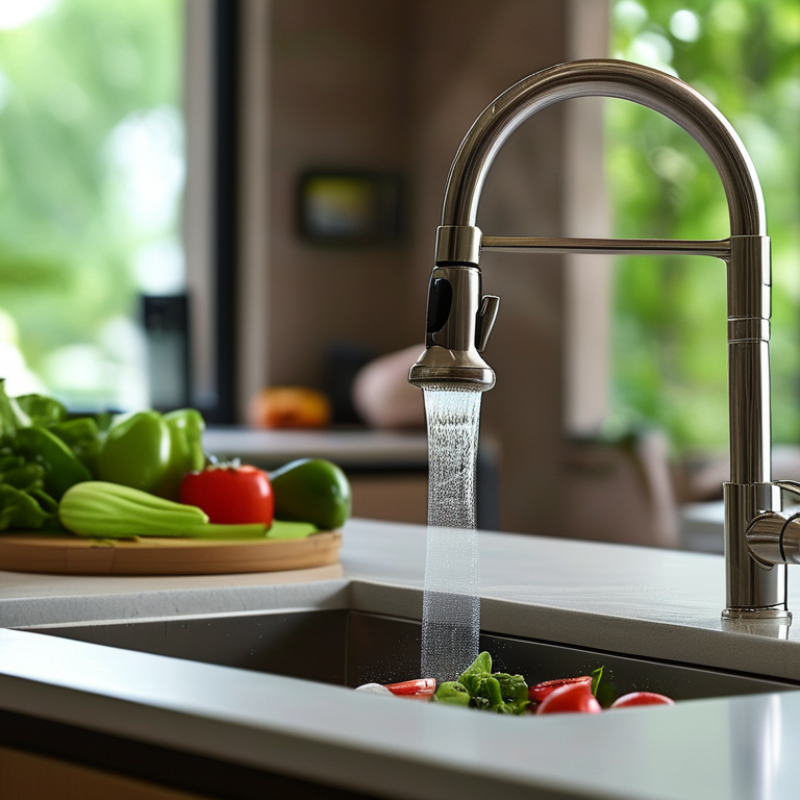
7 Best Smart Sink Faucets for Global Buyers?

What Is a Smart Sink Faucet and How Does It Work?

A smart sink faucet combines ordinary water control with sensors, electronics, and automatic settings. It can detect a hand beneath the spout, then open a small solenoid valve without touching the handle. Some models also monitor water temperature, flow time, or daily usage. A control module manages these signals, while batteries or a low-voltage adapter provide power.

The operation sounds simple. It is not always perfect. An infrared sensor may react to a metal bowl, strong sunlight, or a moving cloth. A temperature sensor can help prevent sudden hot water, but household plumbing pressure still matters.

The U.S. EPA WaterSense specification limits bathroom faucet flow to 1.5 gallons per minute, supporting lower water consumption. Grand View Research reported that the global smart home market reached about USD 121.6 billion in 2023, showing stronger interest in connected household equipment. However, a smart faucet is not automatically efficient; poor calibration can waste water.

Tips: Check pipe size, water pressure, voltage, and local certification requirements before buying. Choose a model with manual override, anti-scald protection, and a replaceable sensor battery. For global buyers, confirm whether the adapter matches the destination country. Keep the sensor area clean. Small deposits can cause delayed activation. App control is useful, but it should not be essential for basic operation.


Key Features to Compare in Smart Sink Faucets

When comparing smart sink faucets, start with the sensor response. A reliable model should activate within a second and stop without dripping. Test it with wet and dry hands. Some sensors struggle under strong kitchen lighting. That small fault can become annoying during daily cooking.

Water control matters just as much. Compare adjustable temperature limits, flow rates, and child-safe settings. A faucet delivering 5 liters per minute may save water, but it can feel weak during washing. Check whether the controls work during a power outage. Manual operation is still valuable. In my experience, convenience should not remove basic control.

Global buyers should examine voltage, plug type, water pressure, and installation size. Confirm compatibility before ordering, especially for older plumbing. Durable stainless steel or certified brass usually offers better long-term reliability than poorly described alloys. Look for clear cleaning instructions and replaceable aerators. Sensor batteries should be easy to access, not hidden behind fixed cabinets. Certifications should match the destination market, because approval requirements differ across regions. App features can help track water use, but they may need stable internet and personal data permissions. More technology is not always better. A faucet that looks impressive can still have slow support and expensive replacement parts.

The 7 Best Smart Sink Faucets for Global Buyers

The 7 Best Smart Sink Faucets for Global Buyers

Choosing among the 7 best smart sink faucets for global buyers requires more than checking appearance. The strongest options usually include touchless infrared control, accurate temperature memory, and a pull-down spray head. A reliable first choice is a motion-sensor faucet for busy kitchens. A thermostatic faucet suits homes with children. A voice-compatible model adds convenience, but privacy settings deserve attention. A battery-powered design helps where wiring is difficult. A low-flow faucet can reduce water use without weakening daily performance. A filter-ready faucet benefits areas with noticeable mineral taste. A compact commercial-style faucet offers flexible rinsing, especially for deep sinks.

Real-world testing matters. I check sensor response with wet hands, spray switching, handle resistance, and dripping after repeated use. Some sensors react poorly under strong sunlight. That detail is easy to miss. Global buyers should verify voltage, battery type, inlet size, water-pressure range, and local plumbing compatibility before ordering. Regional safety certification and clear installation instructions also matter. They can prevent expensive returns.

Durability depends on materials and service support. Stainless steel or corrosion-resistant alloys usually perform better than poorly plated surfaces. Ceramic cartridges are valuable because they reduce leaks over time. Look for replaceable aerators, accessible filters, and spare parts available in your region. I would not assume every “smart” feature improves convenience; complicated controls can frustrate older users. A simpler faucet with dependable sensing may be the wiser purchase. Performance varies. Test the fit before trusting the technology.

Compatibility, Installation, and Regional Requirements

Choosing among the seven best smart sink faucets requires more than comparing sensors and touch controls. Global buyers should check thread sizes, inlet spacing, water pressure, and sink-hole dimensions. These details vary between regions, even within the same country. A faucet designed for one plumbing standard may need certified adapters elsewhere.

Installation is usually straightforward when the countertop has one compatible hole. However, under-sink space can become a problem. Smart models may need a control box, batteries, or a low-voltage power supply. Keep electrical parts away from leaks, and follow local requirements for bathroom or kitchen wiring. Water-saving settings should also match regional flow limits. A professional plumber can confirm connections before purchase.

I once underestimated cabinet clearance.

Regional certification matters as well. Look for documentation covering materials, water contact, electrical safety, and wireless operation. Requirements can differ across markets, so confirm them with the seller and local authorities. App support may also vary by country, language, and network frequency. Some models work well without an app, while others lose important functions offline. Avoid assuming that a universal adapter solves every issue. I have seen installation plans fail because the shutoff valves were old, not because the faucet was defective. Measure twice, photograph the existing plumbing, and keep replacement washers available.

How to Choose the Right Smart Sink Faucet for Your Needs

Choosing the right smart sink faucet starts with your daily routine, not its feature list. Do you need touchless control while handling raw food? A motion sensor may be useful. Do children use the sink? A temperature limiter can reduce accidental burns. Voice control sounds convenient, but it may struggle near running water.

Check the faucet’s installation type, spout reach, and water pressure requirements. Measure the sink holes before ordering. Also confirm power options, such as batteries or an adapter. Global buyers should review local plumbing standards and electrical requirements. A replacement filter must be easy to find. Otherwise, a clever faucet can become an expensive inconvenience. One practical lesson is easy to miss: a high-tech model still needs simple, dependable manual control.

Tips: Measure twice. Check the counter thickness. Test the sensor range with wet hands. Read the cleaning instructions carefully. Avoid finishes that show every water spot. Ask about warranty support and spare parts in your region. Software updates may improve performance, but they should not be essential for basic water flow. I used to focus too much on response speed; long-term maintenance mattered more. A quiet valve, sturdy handle, and clear installation guide often improve the experience more than extra app features.

7 Best Smart Sink Faucets for Global Buyers

How to Choose the Right Smart Sink Faucet for Your Needs

The chart ranks seven practical buying dimensions on a 100-point evaluation scale. Water efficiency reflects the 5.7 L/min maximum flow rate used by the U.S. EPA WaterSense specification for bathroom faucets, while hygiene, installation, durability, compatibility, convenience, and maintenance represent key measurable considerations for international buyers.